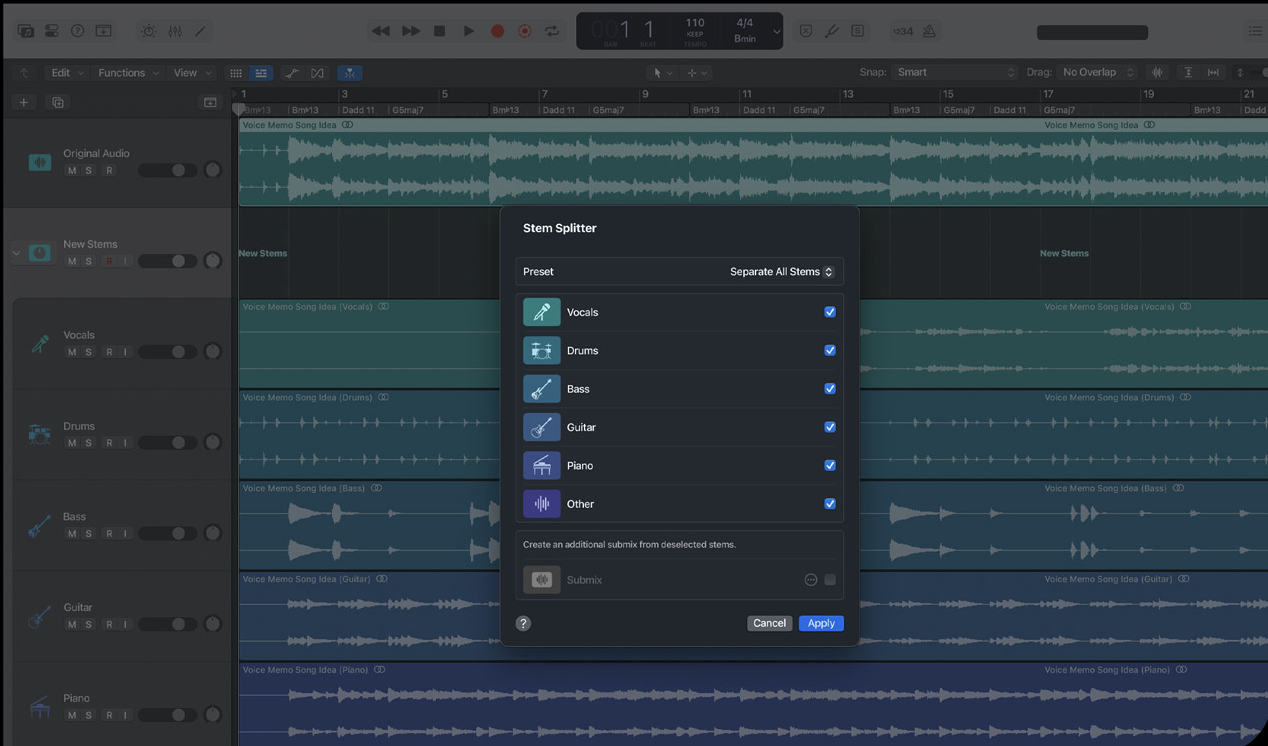
What Happens If You Only Have an MP3 of the Beat?
The Problem: One Stereo File Limits Every Decision An MP3 beat creates a difficult mixing situation because every instrument shares one stereo file. Any equalizer move aimed at the bass also changes the kick, sample, and percussion. Compression reacts to the combined signal instead of the element causing the problem. This becomes especially restrictive when the vocal needs space inside a beat that already sounds finished. The MP3 format also carries decisions made before the file reached your session. Its lossy compression reduces data to create a smaller file, and the resulting quality depends on the encoding settings and source... More.

What To Do When Vocals Fight Chops In The Same Space
In sample-based music, the vocal and the chops often want the same space. The sample may already have midrange tone, movement, and character before the vocal ever enters. Once the vocal is placed on top, the record can feel crowded even when neither part sounds bad by itself. This is usually an equalization problem before it is a loudness problem. Turning the vocal up may make the hook feel thrown over the top of the cut. Turning the sample down may weaken the track. We want to find the actual frequency conflict, then decide whether mastering can solve it or... More.

The Most Common Reason Hi-Hats Feel “Spitty” After Mastering
The Problem Hi-hats can feel controlled in the mix, then become sharp, fizzy, or “spitty” after mastering. The track may get louder and brighter overall, but the hats start pulling attention away from the vocal, snare, and groove. Instead of adding energy, the top end starts spraying forward in a way that feels distracting. This usually happens when brightness is added before harshness is controlled. A mix can feel slightly dark before mastering, so the first instinct is to open the top end. That move may help the record for a moment, but it can also push hi-hats, sibilance, sample... More.
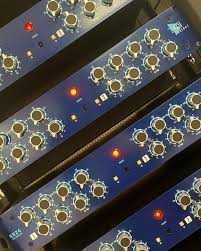
Low Mids: The Area That Makes Hip-Hop Sound Expensive Or Cheap
The Problem Low mids decide whether a hip-hop master feels solid or unfinished. This is usually the range between the upper bass and lower vocal body, roughly from 150 Hz to 500 Hz. It is where drums get their weight, bass gets its shape, samples get their thickness, and vocals get their chest. When this area is right, the record feels expensive before the loudness even matters. When this area is wrong, the problems are easy to hear but hard to name. The track may feel cloudy, small, boxy, hollow, or tired. The low end may seem weak, even though... More.

How To Keep Vocals Raw But Butter Smooth
The Problem Rap vocals need edge to feel believable. That edge usually lives in the same bands that hurt. If you push level first, you force your compressor into harsh behavior. Most “smooth” vocal chains are just dull chains. You can get rid of bite fast with broad cuts. You also lose articulation, and the vocal stops leading the record. The goal is controlled aggression. You keep the forward tone, but you remove the parts that stab. The Principle Aggression comes from stable upper-mids, not extra loudness. Smoothness comes from removing triggers before compression, not after. If you do that,... More.
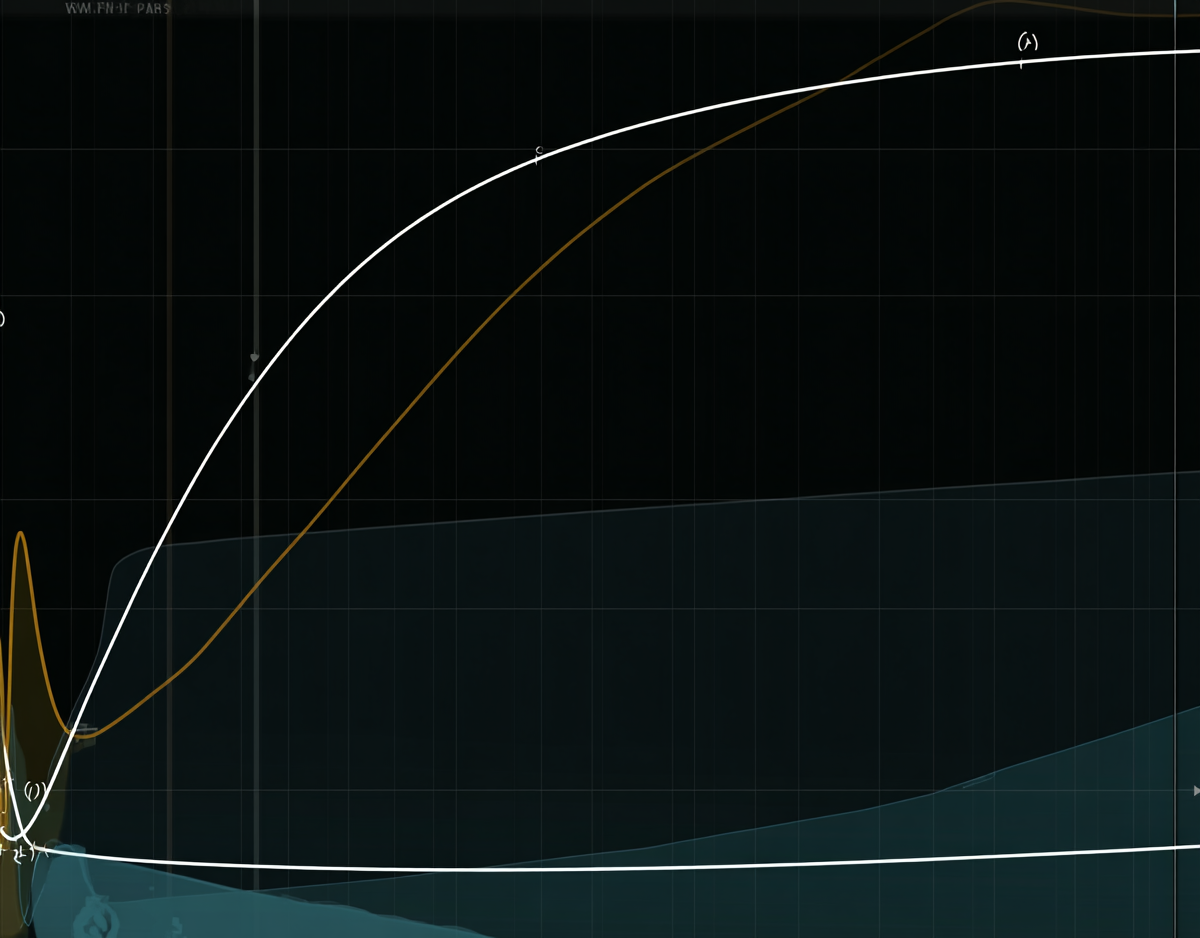
The Frequency-Balance Checklist I Use Before Touching Loudness
The Problem Sometimes the record is loud enough, but it still feels wrong. It sounds chaotic. Untamed. Like every instrument is trying to stand in the same spot. The kick wants the center. The bass wants the same air. The vocal is pushing forward, but it’s getting scraped by the drums and the sample. The top end is busy, but not clear. Nothing feels placed. When you take a mix like that and push loudness, you don’t get impact. You get a louder argument. That’s why I start with frequency balance. Not to “polish” the track. To stop the fight.... More.
About Dume41

Dume has been producing, recording, and mixing hip hop records since 1996, and mastering them since 2005. He is the founder of the record label Fresh Chopped Beats, where he has worked on music featuring artists such as Abstract Rude, Afu-Ra, Gabriel Teodros, Geologic/Prometheus Brown, Jeru The Damaja, Khingz, King Khazm, Macklemore, Percee P, Sean Price, Sir Mix-A-Lot, Sizzla, Specs Wizard, Vitamin D, and many, many others. His mastering chain is built around a high-end analog hardware setup designed to add depth, warmth, and polish while keeping the artist’s intent intact.
To work with Dume on music contact him here.