What ‘Warmth’ Means in Hip-Hop
Why Warmth Is Difficult to Describe Warmth is one of the most overused words in audio. Engineers use it to describe bass weight, softened treble, harmonic color, compression, or depth. Those qualities can appear together, but each requires a different decision. In hip-hop, warmth usually begins with a dense and stable center. The kick has weight, the bass carries tone, and the sample feels connected to those drums. The vocal remains clear without sitting above the record like a separate layer. Warmth also changes how a record moves. Hard transients become slightly rounded, sustained sounds feel fuller, and quiet details... More.

Why Disc Mastering Is Different From Streaming Mastering
Disc Mastering is a different delivery job and format from a streaming master. The final master also has a differemt purpose. People who buy discs want to hear a cohesive complete work, rather than a single cut in a stream of other disjointed singles. That means the order, spacing, track starts, metadata, and final render format are all of paramount importance. A streaming master is usually delivered as individual song files. A disc master is delivered as a complete production master that a plant can replicate accurately. Professional files are rendered in DDP format. The Problem The problem is that... More.
Streaming Normalization: What It Does To Your ‘Loud Master’
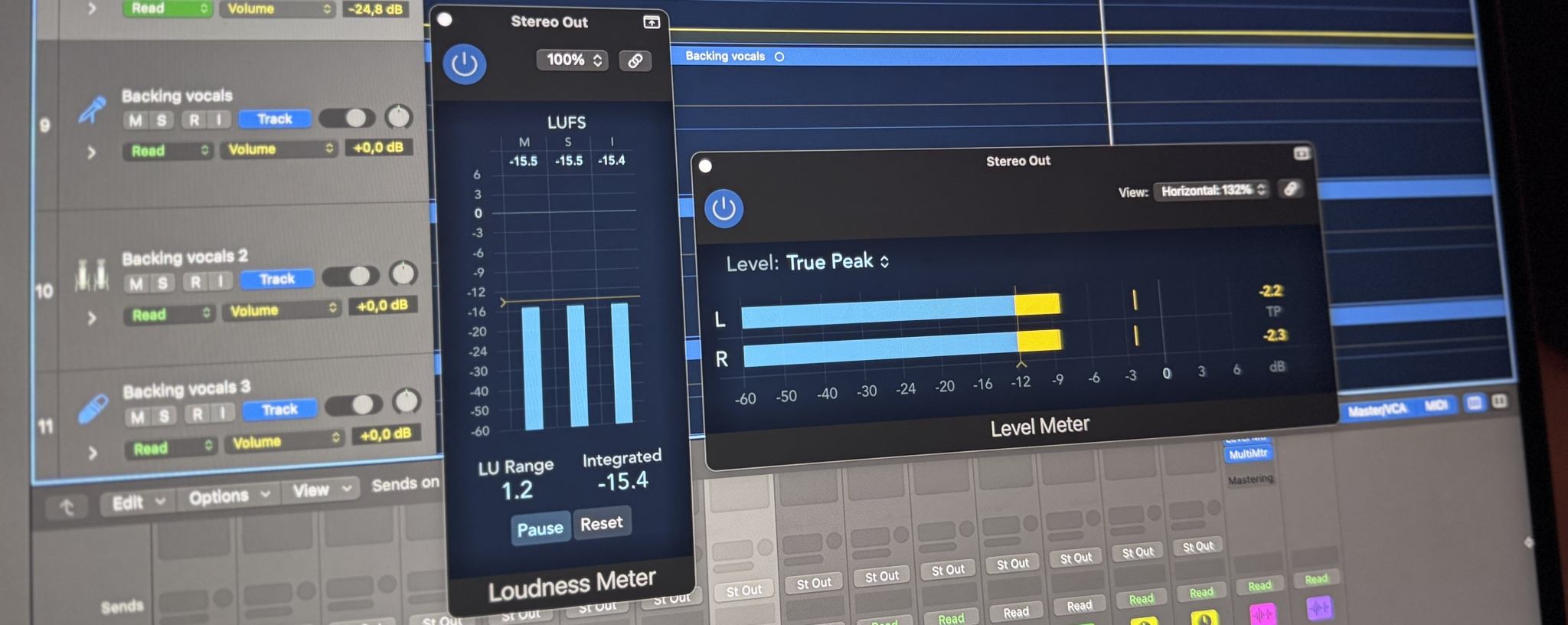
A loud master used to impress listeners. But now streaming services can, and do, turn tracks up or down for more consistent listening (normalization). A master can still be loud, but loudness alone does not guarantee that it will feel bigger once normalization is active. Spotify explains that loudness normalization is applied during playback, not by changing the submitted audio file. Its current normal setting adjusts tracks to -14 dB LUFS, while also giving true peak recommendations for reducing distortion during encoding. Apple’s Sound Check is another version of the same listener-facing idea: it adjusts loudness between songs so they... More.

What To Deliver To Your Distributor: Files, Naming, And Versions
The Problem A finished master can still create problems at upload. The song may sound right, but the delivery can still be messy. A wrong file, unclear name, missing clean version, or mislabeled alternate can slow the release down. In the worst case, the wrong master goes live and nobody notices until it is already public. Distribution is not the place to improvise. Different distributors accept different file types and technical specs, so the safest move is to check the platform before upload. DistroKid currently accepts several audio formats and says 16-bit, 44.1 kHz WAV is typical. TuneCore recommends 24-bit,... More.

The “Client-Proof” Mastering Workflow: Consistency Across Songs
The Problem A client may approve or reject a master one song at a time, but listeners usually experience a project as a body of work. That changes the sound work. A track can sound strong by itself and still feel off withinz the album sequence. If one song accidentally feels louder, thinner, darker, wider, or more aggressive than the others, the project can start to feel unfinished. This is where mastering has to move beyond making each track impressive on its own. The engineer has to listen across songs, not just into songs. The relationships between tracks matter as... More.

Why AI Masters Often Miss The Song’s Intent
The Problem Automated mastering can change the sound quickly. It can make a track louder, brighter, smoother, tighter, or more controlled. That does not mean it understands the record. The problem is not that automated processing is useless. The problem is that it often works from audio behavior without knowing why that behavior exists. That matters in hip-hop because not every rough edge is a mistake. A dark sample may be part of the mood. A narrow drum break may be part of the focus. A heavy low end may be the center of the record. A vocal that sits... More.
The Hidden Cost Of Chasing Loudness First
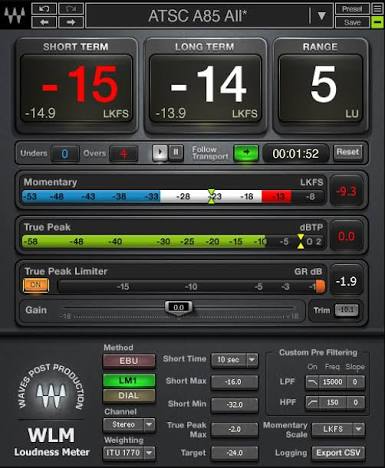
The Problem Loudness is one of the easiest things to notice in mastering, which is why it often gets judged too early. A louder version can feel better for a few seconds because it pushes forward and grabs attention. That does not mean the master is actually better. It may only mean the level changed before the record was ready for that level. The hidden cost shows up after the first impression. Drums can get smaller. The low end can blur. Vocals can become harsh or flat. Samples can lose movement. The master may still be loud, but the record... More.

What You’re Really Paying For In Mastering
The Problem A lot of artists think mastering is mostly about access to expensive equipment. That makes sense from the outside, because the gear is visible and easy to describe. You can point to an analog equalizer, compressor, converter, or limiter and understand that it costs money. But the gear is not the full service. The real value is the judgment behind every move. Mastering is where the record gets checked, balanced, protected, and prepared to survive outside the studio. The Principle Mastering is not paying for tools; it is paying for decisions that survive playback everywhere. That is the... More.

How to Keep Ad-libs Exciting Without Cluttering the Vocal
The Problem Ad-libs can make a vocal feel more alive, but they can also make the center feel crowded. In mastering, that shows up as a lead that feels less readable than it should, even though the stereo mix may still sound exciting on first pass. The issue is not always level alone. It is often a combination of placement, tonal overlap, and how the side energy is interacting with the lead. That matters because mastering works on the stereo file, not the vocal stack in isolation. You are judging the finished picture as it exists. The goal is not... More.
How Many Revisions Is Normal—and How To Use Them Wisely
The Problem Revisions should tighten a master, not stretch it into an open-ended debate. In hip hop, the mix often keeps evolving after the first bounce. That makes artists treat mastering as the place to solve mix decisions. Unlimited revisions reward vague notes and moving goals. The mastering engineer ends up chasing a feeling instead of improving translation. Two revisions is a normal ceiling when the mix is stable and the notes are specific. It forces you to listen on purpose, write actionable requests, and commit. It also protects the timeline, which is usually the real constraint. What To Listen... More.
About Dume41

Dume has been producing, recording, and mixing hip hop records since 1996, and mastering them since 2005. He is the founder of the record label Fresh Chopped Beats, where he has worked on music featuring artists such as Abstract Rude, Afu-Ra, Gabriel Teodros, Geologic/Prometheus Brown, Jeru The Damaja, Khingz, King Khazm, Macklemore, Percee P, Sean Price, Sir Mix-A-Lot, Sizzla, Specs Wizard, Vitamin D, and many, many others. His mastering chain is built around a high-end analog hardware setup designed to add depth, warmth, and polish while keeping the artist’s intent intact.
To work with Dume on music contact him here.