

What ‘Over-Limited’ Actually Sounds Like (In Plain Language)
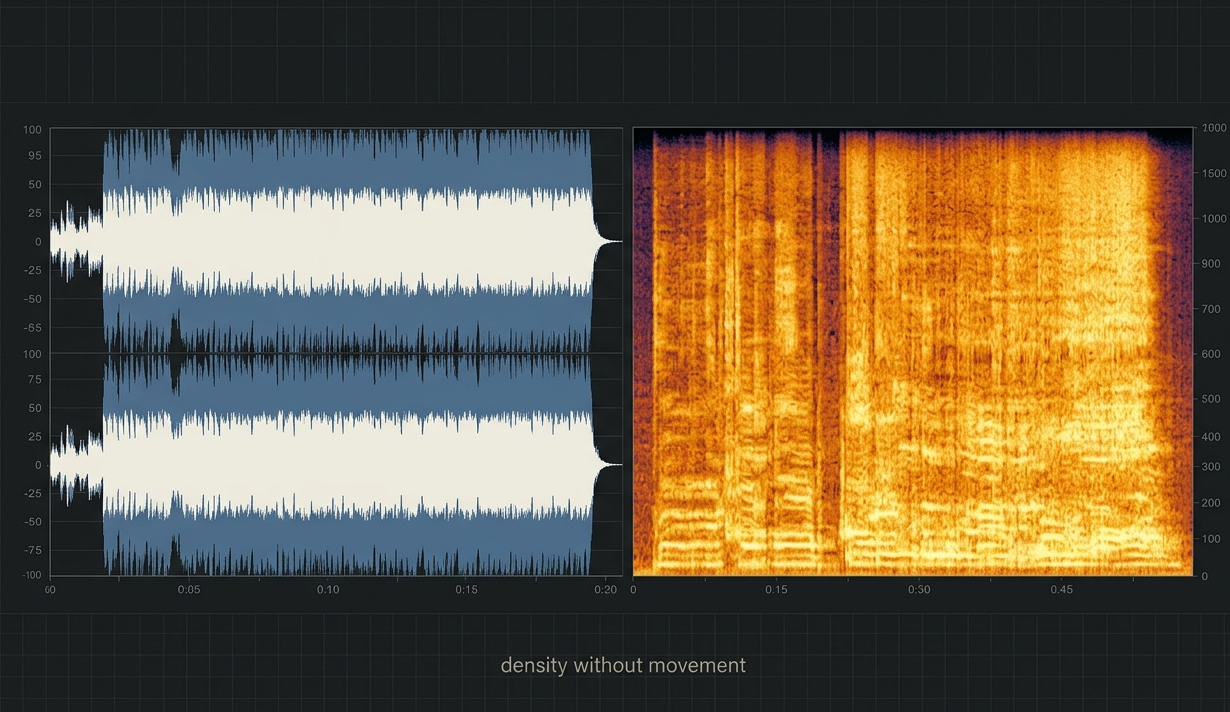
The Problem
A lot of people know when a track feels harsh or tiring, but they cannot name the cause. One common reason is over-limiting. That is what happens when a limiter is pushed so hard that the music loses too much dynamic range, meaning the natural difference between louder and softer moments gets flattened.
The result is a kind of pressure. Everything feels pinned to the front, with less movement, less punch, and less space for the song to breathe.
The Principle
A limiter should control peaks, not erase contrast. When the whole track starts behaving like a peak, the sound stops feeling finished and starts feeling trapped.
That is why over-limited music often feels smaller, even when it is louder. Loudness without contrast does not sound powerful for long. It sounds crowded.
What Over-Limited Actually Sounds Like
The easiest way to describe it is this: the track sounds like it is leaning forward too hard all the time. The kick may lose its hit. The snare may stop jumping out of the speakers. Vocals can start to feel glued on top of everything instead of sitting inside the record naturally.
You may also hear the low end stop moving in a rounded off way. Instead of a bass line pushing the song along, it turns into a constant block of energy. On the top end, cymbals, hats, and bright vocals can take on a flat, papery edge that feels tiring fast. Harsh.
Why People Mistake It For “Professional”
At first, over-limited audio can seem impressive because louder playback often feels more exciting in a quick comparison. That first impression tricks people into thinking density is the same thing as quality. It is not.
A professional-sounding master still has control, punch, and shape. It can feel strong without sounding pinned down. If the track only sounds good for a few seconds before it starts wearing you out, that is usually not polish. That is excess.
What To Listen For Instead
Listen for punch, depth, and ease. A good master can be firm and present while still letting the drums hit, the vocal breathe, and the low end move naturally. The song should feel confident, not squeezed.
As a rule of thumb: when it’s much, much louder but the track feels smaller, you have probably gone too far.
All Categories
About Dume41

Dume has been producing, recording, and mixing hip hop records since 1996, and mastering them since 2005. He is the founder of the record label Fresh Chopped Beats, where he has worked on music featuring artists such as Abstract Rude, Afu-Ra, Gabriel Teodros, Geologic/Prometheus Brown, Jeru The Damaja, Khingz, King Khazm, Macklemore, Percee P, Sean Price, Sir Mix-A-Lot, Sizzla, Specs Wizard, Vitamin D, and many, many others. His mastering chain is built around a high-end analog hardware setup designed to add depth, warmth, and polish while keeping the artist’s intent intact. To work with Dume on music contact him here.