

Streaming Normalization: What It Does To Your ‘Loud Master’
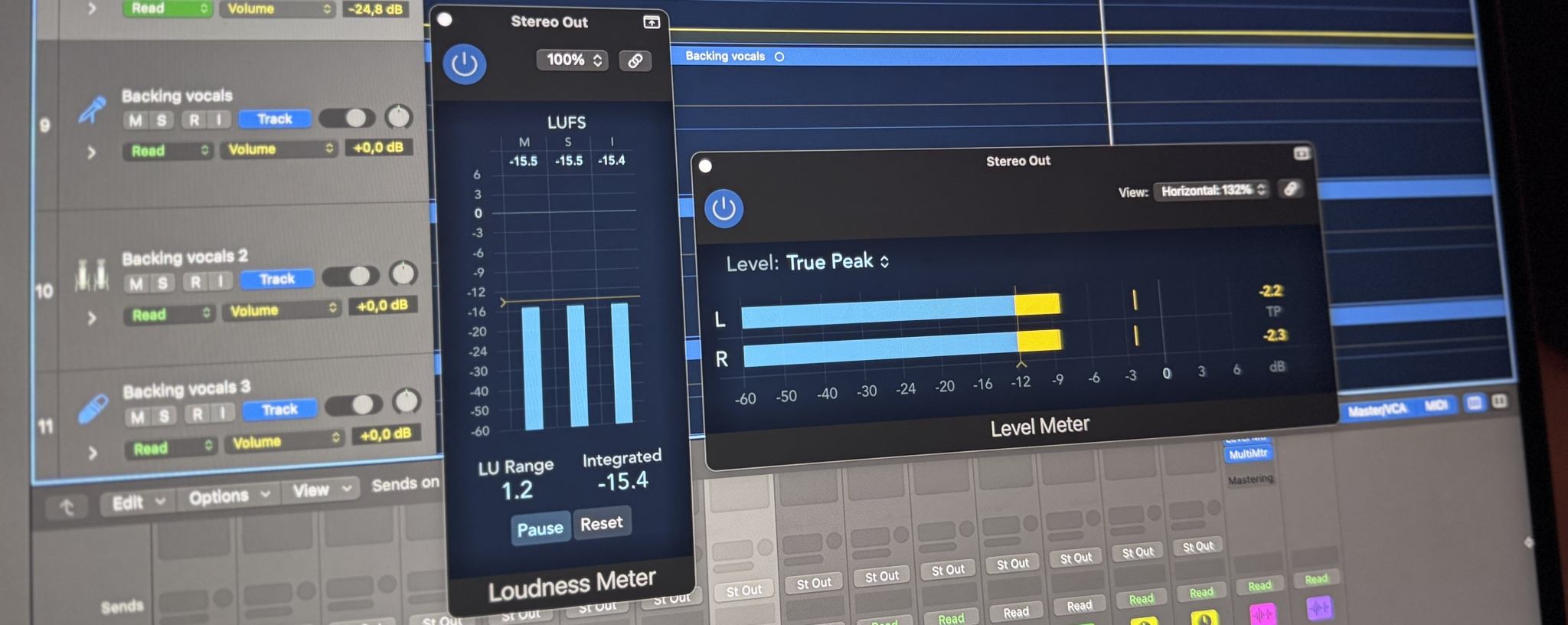
A loud master used to impress listeners. But now streaming services can, and do, turn tracks up or down for more consistent listening (normalization). A master can still be loud, but loudness alone does not guarantee that it will feel bigger once normalization is active.
Spotify explains that loudness normalization is applied during playback, not by changing the submitted audio file. Its current normal setting adjusts tracks to -14 dB LUFS, while also giving true peak recommendations for reducing distortion during encoding. Apple’s Sound Check is another version of the same listener-facing idea: it adjusts loudness between songs so they play at a more consistent volume. See Spotify’s loudness normalization guidance and Apple’s Sound Check support page for individual platform explorations. Although many of these features can be disabled on some platforms, they’re usually on by default.
The Problem
The problem is that a “loud master” can lose its loudness advantage after streaming normalization. If a track is pushed hard into limiting, the platform may turn it down to sit closer to other tracks. The limiter damage remains, but the extra playback level may not.
That is the tradeoff many artists miss. A crushed master can sound exciting in the studio when it is louder than the comparison. Once both versions are level-matched, the louder master may reveal less punch, less depth, and more distortion. Normalization does not undo the limiting, clipping, or transient loss that happened before upload.
The Principle
The principle is simple: streaming normalization turns down level. It can reduce playback volume, but it cannot restore the punch removed by heavy limiting. If the master was made louder by shaving off drums and flattening movement, that sound stays in the file.
This is why loudness should be judged after level-matching. A louder preview can trick the ear into hearing better tone and more energy. When the level advantage is removed, the engineer must ask themselves whether the master still has impact.
What Streaming Normalization Actually Does
Streaming normalization is a playback adjustment. The service analyzes loudness and changes the playback gain so different songs feel closer in volume to the listener. It is not remixing the track, remastering it, or repairing anything inside the audio file.
LUFS means Loudness Units relative to Full Scale. In practical terms, it is a way to measure perceived loudness over time. Integrated LUFS measures the loudness of the whole song, which is why a short loud hook and a sparse verse both affect the final reading.
True peak is different from loudness. It estimates the highest peak that may occur during playback or conversion, including peaks that can appear between digital samples. A master that barely avoids clipping in the session can distort after encoding there is a lack of management of the peak margin.
Why A Louder Master Gets Turned Down
If a master is much louder than the platform’s playback reference, the platform can (and usually does) lower its gain. That means the listener may not hear the track at the level you heard in the mastering session. The file is still heavily limited, but the playback is quieter.
This is where the loudness race breaks down. Pushing a master harder can make it win before normalization because it is simply louder. After normalization, the same master may compete at a similar playback volume against a more dynamic version. The more dynamic version may feel stronger because the drums and low end still have room to move.
Believe it or not, this is a good thing. Your job as an engineer is now to make the music sound its best. Remember: you’re competing with music from the 1960s to now. The listener doesn’t care how indy the music is. They still want it to sound wonderful.
What Happens To Punch After Normalization
Punch comes from contrast. A kick feels strong because the front edge rises quickly against the material around it. A snare cracks because it has shape, not just because it is high in level.
Heavy limiting can reduce that contrast. It may raise the average loudness, but it can also shave the transient edges that make drums feel physical. Once normalization turns the file down, the average level advantage is reduced while the lost transient shape remains lost.
This is why two masters with the same normalized playback level can feel very different. One may sound dense but flat. The other may sound slightly less packed, but the drums speak better and the beat feels more alive.
Why Hip-Hop Still Needs Impact
Hip-hop mastering cannot ignore loudness. A master that is too soft can feel unfinished next to commercial releases, especially in cars, headphones, and playlists.
Protect the parts that create impact. The kick, snare, bass, sample, and vocal need weight and placement. If the master gets louder but the drums stop feeling like they lead the track, the loudness is not doing enough useful work.
A strong hip-hop master should still feel controlled. It should have density when the record asks for it, but not at the expense of rhythm.
Do Not Master To A Number Blindly
The wrong lesson is to master every song to one published number. A streaming reference can be useful, but it is not the whole job. Different tracks need different amounts of density, peak control, and loudness to feel finished.
A sparse track may read loud without much limiting because there is room around the main elements. A dense sample-based track may need more control just to feel organized. A hard drum record may need less limiting than expected because the punch crafted purposefully.
Use loudness numbers as information, not as instructions. Check integrated LUFS, short-term loudness, and true peak, but keep listening to the record itself. The master has to translate musically.
Use Loudness As A Translation Check
A practical way to work is to compare masters you’re making at matched playback volume. Turn the louder version down until it is not winning by level. Then listen for drums, vocal clarity, bass shape, sample movement, and fatigue.
Also check how the master feels when lowered by a few decibels. If the record collapses when it is not loud, it may be relying too much on level. A good master should still communicate at normal listening volume, because that is how many listeners will hear it.
Use limiters with a clear reason. The limiter should control peaks, create density, and finish the record without taking away the movement that made the mix work.
Common Mistakes
The first mistake is comparing the loud master against the quieter master without level-matching. The louder version will usually feel better at first because human hearing favors level. That does not prove the master is better engineered.
The second mistake is chasing a streaming target so closely that the record loses its style. Numbers can help you avoid obvious problems, but they cannot tell you how hard the drums should feel. The third mistake is ignoring true peak headroom when the master is already loud, because encoding can create distortion that was not obvious in the session.
Final Checklist
Before approving a loud master, turn it down and compare it against a less limited version. Listen for whether the drums still have shape, whether the vocal still reads, and whether the bass still moves instead of just sitting as pressure. If the loud version only wins before level-matching, it is probably not the stronger master.
Check loudness, true peak, and translation, but do not let the number make the decision by itself. Streaming normalization changes playback level, not the internal condition of the master. A loud master still has to earn its loudness after the volume advantage is gone.
All Categories
About Dume41

Dume has been producing, recording, and mixing hip hop records since 1996, and mastering them since 2005. He is the founder of the record label Fresh Chopped Beats, where he has worked on music featuring artists such as Abstract Rude, Afu-Ra, Gabriel Teodros, Geologic/Prometheus Brown, Jeru The Damaja, Khingz, King Khazm, Macklemore, Percee P, Sean Price, Sir Mix-A-Lot, Sizzla, Specs Wizard, Vitamin D, and many, many others. His mastering chain is built around a high-end analog hardware setup designed to add depth, warmth, and polish while keeping the artist’s intent intact. To work with Dume on music contact him here.