

How Premium Monitoring Decisions Beat ‘Better Plugins’ Every Time

The Requirement
I did not need more options. I needed fewer mistakes. That is the real requirement at the mastering stage, and it is the point many people miss when they start shopping for solutions. Better plugins can give you more control, more color, and more ways to push a track around, but if the monitoring is not telling you the truth, all that extra control just lets you make wrong decisions with more confidence.
That is why this changed for me when I started using Amphion One18s. I was not looking for a prestige purchase or a new thing to talk about. I wanted a monitoring chain that would let me hear balance, low-end behavior, and top-end tension in a way that held up outside the room. That is a different goal from buying another plugin, and it leads to different results.
The Test
The test was not complicated, because it should not be. I ran material I know well through the room and paid attention to the decisions that usually cost time later. I listened for how quickly I could judge vocal placement, how confidently I could set low end without second-guessing, and whether brightness was reading as clarity or just false excitement. Those are the decisions that matter in actual work, not the fantasy scenario where every plugin demo makes a track sound better in thirty seconds.
What I was really testing was judgment speed and translation. Could I make a call once and trust it? Could I stop fixing the same issue twice because the room or speakers had hidden the real problem the first time? That is where premium monitoring earns its place. It does not just sound better. It reduces revision by making the important things easier to identify before they turn into problems somewhere else.
The Monitoring Upgrade
What changed first was not tone. It was certainty. With better monitoring, I was no longer leaning on extra processing to explain what I could not clearly hear. I could tell sooner whether the bass was actually solid or just oversized, whether the snare had authority or just edge, and whether the vocal was present because it belonged there or because something harsher in the upper mids was forcing it forward.
That is the part people confuse when they talk about plugins as upgrades. Plugins are tools for acting on a decision. Monitoring is what lets you make the right decision in the first place. If the picture in front of you is incomplete, the tool chain behind it becomes a pile of guesses. Once the monitoring improves, the need to keep auditioning one more plugin often drops fast, because the answer was never hidden in the plugin folder. It was hidden in poor translation.
What Changed In Actual Mastering Decisions
In practice, the biggest change was how much less I had to chase correction after the fact. Low-end moves became smaller and more deliberate, because I was hearing the relationship between kick and bass more honestly the first time. Top-end choices got cleaner too, because I could hear the difference between needed openness and fake polish. That matters in mastering, where a small move in the wrong place can make a track feel finished for ten seconds and tiring for the next three minutes.
Dynamics decisions improved for the same reason. When you can hear transient shape and density more clearly, you stop reaching for louder processing as a substitute for conviction. You do not need three more stages of enhancement to make a record feel expensive. You need to know when to leave it alone, when to tighten it, and when the mix is already carrying what it needs. Better monitoring makes restraint easier, and restraint is often where quality shows up.
Why Premium Monitoring Beats Better Plugins
A plugin can only work with the judgment you bring to it. That is why premium monitoring beats better plugins every time. The plugin may be excellent, but it still depends on you hearing the problem correctly, choosing the right move, and stopping at the right point. If the monitoring is exaggerating or hiding something, the plugin becomes part of the confusion instead of the solution.
This is also why endless plugin upgrades rarely solve the problem they promise to solve. People think they need a cleaner EQ, a deeper limiter, or a more expensive saturator, when what they really need is to hear the record clearly enough to know whether any of those moves are necessary. Monitoring affects every decision in the chain. A plugin affects one move at a time. That is not a close comparison. One sharpens judgment itself, while the other waits for judgment to arrive.
Who This Is For
This matters most for engineers who are already doing serious work but feel like translation still takes too much cleanup. If you keep finding that your low end shifts too much outside the room, or your top end feels right in session and too aggressive later, the issue may not be your processing options. It may be that your monitoring is making you solve the wrong problem. That is especially true in mastering, where small errors compound quickly and where confidence matters as much as taste.
It also matters for people tempted by constant plugin turnover. If every few months you are hoping the next purchase will fix decision fatigue, it is worth asking whether your bottleneck is really sonic capability or simple audibility. A better monitor path will not make you talented, and it will not replace experience. What it can do is remove a layer of fog between your ears and the work. That is often the upgrade that actually pays back.
The Simplest Next Step
The simplest next step is not buying what I bought. It is being honest about where your errors are coming from. If your decisions regularly fall apart outside the room, stop assuming the answer is another plugin. Start with the possibility that the monitoring is costing you more than the software is saving you. That is a much more useful question, and it usually leads somewhere practical.
If you want the outcome I am talking about, hire me for a track and let the result speak for itself. I would rather prove the value in the work than sell the theory too hard. Good monitoring does not matter because it sounds impressive in the room. It matters because it helps records hold together once they leave it.
All Categories
About Dume41
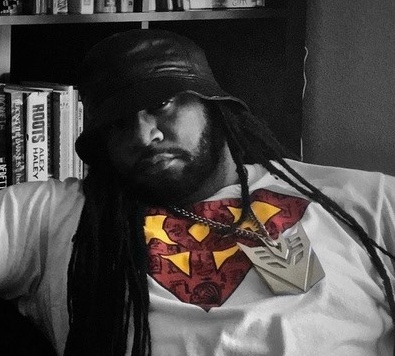
Dume has been producing, recording, and mixing hip hop records since 1996, and mastering them since 2005. He is the founder of the record label Fresh Chopped Beats, where he has worked on music featuring artists such as Abstract Rude, Afu-Ra, Gabriel Teodros, Geologic/Prometheus Brown, Jeru The Damaja, Khingz, King Khazm, Macklemore, Percee P, Sean Price, Sir Mix-A-Lot, Sizzla, Specs Wizard, Vitamin D, and many, many others. His mastering chain is built around a high-end analog hardware setup designed to add depth, warmth, and polish while keeping the artist’s intent intact. To work with Dume on music contact him here.