

The King of Mastering Compressors
The Requirement: One Compressor With Range, Control, and Weight
A mastering compressor needs to manage dynamics without reducing the punch of the record. It should control short peaks, stabilize the low end, and add density while preserving the movement range of the mix. Few compressors can handle all those jobs without favoring a specific sound. If you don’t have tens of thousands of dollars to spend on multiple masteirng compressor, you’ll want one that can sound more than one way.
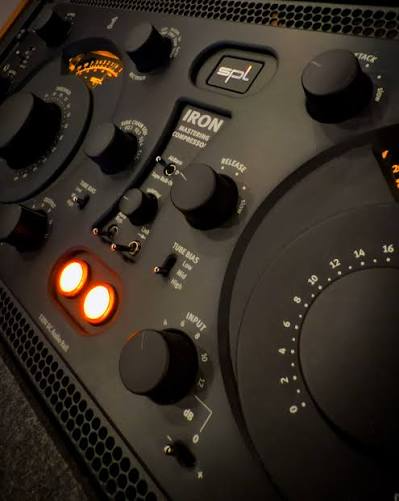
The SPL IRON provides that range in one analog box. It can deliver subtle leveling and firm transient control. The IRON also provides enough adjustment to shape how compression feels. Threshold, tube bias, rectifier selection, attack, release, ratio, and sidechain response all influence the result. Having direct control of them all provides tremendous choice.
Check out the technical details in the SPL IRON manual.
Why the SPL Iron Stands Above Other Mastering Compressors
The Iron is an original analog design rather than a recreation of a vintage compressor. SPL developed it around a parallel dual-tube circuit, custom transformers, variable-bias compression, and its 120-volt operating technology. The design combines tube compression with the headroom and precision expected from modern mastering equipment.
Tape Op placed the IRON alongside established mastering compressors in quality and praised its adjustability and exceptionally low noise floor. Mix magazine reached the same conclusion, describing a broad range of compression styles extending from subtle control to extreme processing. Both reviews found that the unit could apply heavy gain reduction while remaining refined.
That combination separates the IRON from compressors built around a signature sound response. It can sound smooth, fast, dense, open, or forceful according to the selected controls. The box provides several useful compression types that used to require the use of different compressors.
The Test: Moving From Transparent Control to Heavy Compression
The best test for a mastering compressor involves more than reducing one or two decibels. I want to hear what happens when the record needs gentle leveling, firm peak control, and much deeper compression.
The Tape Op review of the SPL IRON found that it could catch stray transients almost invisibly on faster settings. They also found it capable of pulling acoustic instruments together into the same space, adding dimension to electronic music, and controlling different styles without forcing the same character onto each recording. That sounds similar to many plugins- but analog is analog. My personal opinion is that plugins can get you 90% of the way there. The real question: Are you willing to pay, and ig so, how much will you pay for the last 10%?
The Mix review of the V1 SPL IRON pushed the unit much harder. The review reported as much as nine decibels of gain reduction on a hip-hop mix that already had limited dynamics. The result remained large, energetic, and musically useful rather than collapsing or thinning under the processing. And hip-hop is my bread an butter.
A Tube Compressor With an Exceptionally Low Noise Floor
Tube equipment can add noise when several stages are combined in a mastering chain. The IRON was designed to provide tube-based compression with an unusually quiet operating floor. That becomes vital when quiet passages, fades, and sample textures need to remain clear. Old style analog effects are fine. But they should be a choice instead of mandatory every time you go outside the box.
Tape Op measured the unit against several established tube mastering compressors. The IRON’s noise sat below the reviewer’s original measurement range, requiring the setup to be reconfigured for readings quieter than minus 110 dB. The review credited the 120-volt circuitry, proprietary amplification stages, and shielded Lundahl transformers for that performance.
This gives the IRON a polished character rather than a rough tube sound. The circuit can add weight and depth without placing obvious hiss underneath the music. That quality becomes important when compression appears late in a detailed analog mastering chain, as it does in mine.
Six Rectifier Circuits Create Six Compression Responses
The rectifier section is central to the IRON’s flexibility. Six diode and capacitor combinations change the control signal that drives the compression. Germanium, silicon, LED, and mixed diode arrangements produce different timing ranges and dynamic responses.
Changing the rectifier alters more than speed. It changes how the compressor catches a transient, follows sustained energy, and returns after gain reduction. Attack and release controls then refine the response available from the chosen rectifier.
Mix found the LED rectifier especially flattering for program material, with a solid emphasis through the low frequencies. The review also described a broad range of results created by combining rectifier, attack, release, sidechain, threshold, and bias settings.
Tube Bias Adds Another Layer of Dynamic Control
The three-position tube-bias control changes how strongly the tubes respond. Higher bias settings produce more compression when the other controls remain unchanged. This lets the engineer alter the depth and feel of the response without rebuilding the complete setting.
Tube bias can create a shift in the way the IRON holds the record. One setting may provide light cohesion and open transients. Another may bring the music forward with firmer density and more obvious dynamic control. You get to play with switches and listen to the sound effects. It’s almost too much fun. Tape Op praised the ability to choose bias and rectifier settings by ear.
More information about the current hardware lineage is available on the official SPL IRON product page. This article remains focused on the original V1 analog unit. Later filter revisions do not define the strengths discussed here.
Fast Transients Stay Firm and Controlled
A compressor can catch drum peaks while preserving the body behind them. The IRON uses an opto-based stage in its control path to limit sudden control-voltage peaks before they overwhelm the tube-compression response. SPL designed this system to keep the output lively during deeper gain reduction.
Tape Op described the IRON as smooth and flexible when handling fast transients. The review found that the unit could control sharp events without making its operation obvious. That quality is valuable when a kick or snare creates a hard-hitting peak level but already has the right tone.
Bass Gains Dimension, Weight, and Impact
Low-end control is one of the IRON’s strongest qualities. And that’s where msot hip-hop lives. Tape Op specifically praised its ability to control bass with dimension and impact. Mix also found that certain rectifier and sidechain combinations could emphasize low-frequency weight in a solid and flattering way.
Bass compression can easily reduce scale. A compressor may stabilize the level while removing the movement and size that made the low end smack. This response suits hip-hop mastering. The kick and bass frequently consume much of the available headroom, yet both still need weight after final limiting.
Heavy Gain Reduction Can Still Sound Expensive
Many mastering compressors sound impressive while the meter barely moves. Their character becomes… shit once the gain reduction becomes substantial. The IRON retains its quality further into compression than most boxes I have used.
Mix reported that even extreme drum-bus compression remained difficult to push into audible distortion. The reviewer heard increased size and width while using between one and ten decibels of gain reduction. Tape Op also noted that the compression could remain unobtrusive despite readings deeper than the reviewer normally accepted.
The Sidechain Curves Shape How the Compressor Responds
The V1 unit includes four internal sidechain curves developed from Wolfgang Neumann’s mastering work. These curves alter the detector signal rather than applying equalization directly to the audio. Each setting changes which frequencies cause the compressor to react more strongly. The manual draws the curves out for you so that you can easily tell which kinds of tracks require more response here or there.
For me, this is more useful than a trying to figure it out with a simple high-pass filter. One setting can reduce the compressor’s reaction to a specific low-frequency area. Another can encourage stronger control through a dense midrange or bright vocal passage. Think about the difference between Early 2000’s Dr. Dre and Mid 90s A Tribe Called Quest- with its jazz horns and keys. They need different controls and choosing to respond to mid range a little more woudl make sense for the Tribe work.
Tape Op praised the musical variety of these curves, while also noting that they required time to learn. Mix found them effective on drums, hip-hop mixes, and vocals. I’m talking here about the original V1 curves rather than the revised filters introduced in later hardware.
Precision Controls Make the V1 Practical for Mastering
Mastering hardware needs repeatable settings. Settings that can be recalled. The IRON uses switched or detented controls for its main functions, including calibrated input and output gain. These controls make it possible to document a setting and return to it during a revision.
The automatic bypass system also supports careful comparison. It cycles between processed and hardwire-bypassed signals at an adjustable interval. This allows the engineer to listen without reaching for the front panel during every comparison.
What Changed in the Mastering Chain - WHY is it The King?
The IRON can replace several narrower compression choices. It can handle transparent leveling, transient management, low-end control, and stronger dynamic shaping from one position in the chain. That reduces the need to patch several compressors simply to audition different responses. The SPL IRON combines precision, weight, and range in one analog compressor. It can remain nearly invisible or become a major part of the finished sound.
That is why I call the V1 SPL IRON the king of mastering compressors. It handles careful work and heavy work capably. It gives a mastering engineer more ways to strengthen a record without losing what already works.
If you want to hear how it sounds on your record click the “work with me” in my bio below. Send me a test track for a free sample. Just mention this article in your note.
All Categories
About Dume41

Dume has been producing, recording, and mixing hip hop records since 1996, and mastering them since 2005. He is the founder of the record label Fresh Chopped Beats, where he has worked on music featuring artists such as Abstract Rude, Afu-Ra, Gabriel Teodros, Geologic/Prometheus Brown, Jeru The Damaja, Khingz, King Khazm, Macklemore, Percee P, Sean Price, Sir Mix-A-Lot, Sizzla, Specs Wizard, Vitamin D, and many, many others. His mastering chain is built around a high-end analog hardware setup designed to add depth, warmth, and polish while keeping the artist’s intent intact. To work with Dume on music contact him here.